Category Archives: Reviews

The Invisibles by Grant Morrison

This post is in the theme “A Long Waltz Through Nerddom”. Read the first.

August 16, New York: What is The Invisibles?

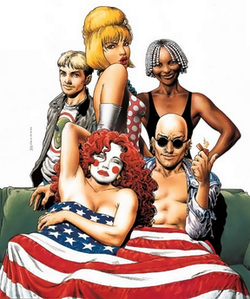
The Invisibles is a masterwork of a comic from Grant Morrison (who has since done incredible runs on very famous titles). The Invisibles is action comic, conspiracy pastiche, epistemological exploration, gnostic treatise, magick primer, 1990s cultural record. And at all of these things it is exceptional. The book tells the story of the battle between good versus evil, individualists versus conformists, witchy rebel freedom fighters with awesome haircuts versus the worst government suits and their demonic masters.
The first thing to know about The Invisibles is that not everyone has read it. When you read it, and then you find yourself bursting with the desire to talk with someone about it, keep this fact in mind. You will have to either a) go back to this person who introduced it to you or b) give it to a friend and hassle them about it until they’ve finished it. I’ve done both.
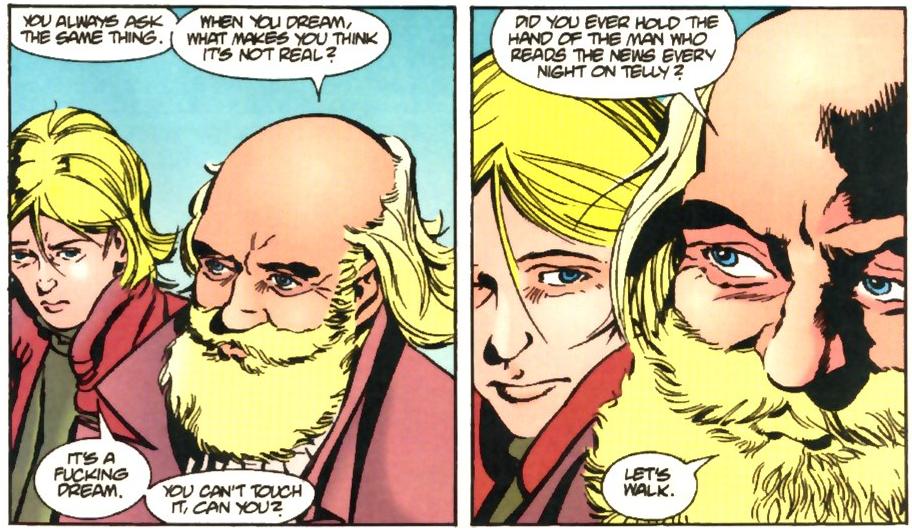
I first discovered The Invisibles as Grant Morrison says he intended, through the glossy second volume which then pulled me into the deeper stuff of the first and third. I was editing a film trailer based on a sequence from the second volume. For background, the director gave me all the trade paperbacks and I read every one. The series is finite— there are only the three volumes, so it’s actually possible to read the whole thing. And then to read it again. And again.

The Invisibles seduces by taking all the nerdstuff you love and arguing that it is indeed possible. That it exists all around you in secret. That all the conspiracies are true and that magick is real and that you too can perform it. By reading The Invisibles you are already a part of a magickal spell. It takes this 1990s notion that I rediscovered watching Hackers— that anyone with a little computer knowledge could have been a wizard— and it makes characters from that scene ACTUAL WIZARDS.

I was more primed for this than you might think. I’ve long been a searcher when it comes to spiritual worldviews and there was a period of a few years in my late teens that I read the tarot and believed firmly in supernatural forces of indeterminate nature. (The best part about searching is not having to make up your mind.) The Invisibles reconnected me to that as an adult. Years prior the search had led me to pursue a second degree in philosophy, but along the way I’d lost the original impetus (god, but academic philosophy is boring). I was reading Kant when I should have been reading comics.
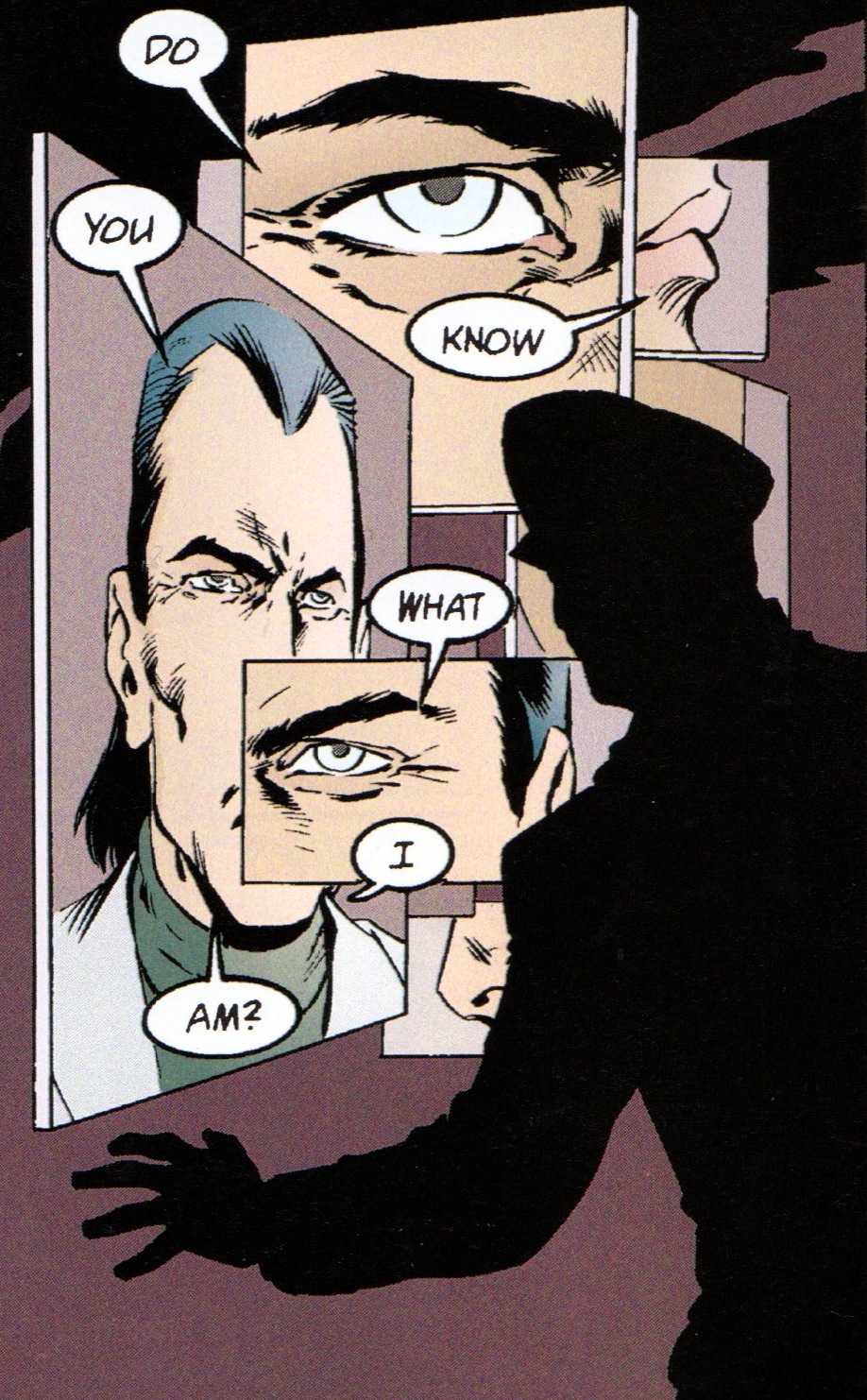
The Invisibles is described by Grant Morrison as a spell in itself. It certainly worked on me. I reread these books multiple times, tore them apart for reference texts and then went after those. There was a point at which I read the series as an investigative project, spelunking its secrets and following the threads. This required reading the comics page by page with the annotation volume, Anarchy for the Masses. I dived deep into the source material. That reading led to VALIS, to The Prisoner, and even to me rolling my eyes through a little Lovecraft. It was an intoxicating period of media consumption.

Even now, embroiled in the Thirty-Three Project with my reading list set, there was a strong temptation to delve back into this material. (Thankfully, VALIS is next up.)

Are the conspiracies true? Does magick really work? Will the voudon loa take a candlelit meeting with me if I sacrifice enough roosters? I think the answers are different for everyone. Magic is in the eye of the beholder, it’s all about subjectivity. New Orleans is a magical town because the consensus reality doesn’t preclude the existence of magic. The rites of the group headed by Aleister Crowley pushed the boundaries of shared experience, of collective subjective belief. And they all experienced great magick. Which is where The Invisibles gets really interesting… mass media can create these consensual beliefs. For the readers of this series and the consumers of derivative works like The Matrix, the philosophical tenets and existential questions have been raised. A seed of belief has been planted. The Invisibles is indeed a powerful spell for creating a belief in the world of The Invisibles.

Become a part of the spell. Start here at the beginning, or here at the glossy fun bits. When you’re desperate to talk to someone about it, let me know.
Weezer: Weezer and Pinkerton

This post is in the theme “A Long Waltz Through Nerddom”. Read the first.

August 16, New York: I first heard (watched) Weezer when the “Buddy Holly” and “Undone” videos were all over TV. I hated it. These preppy guys with their poppy songs. I couldn’t imagine a music that was further from what I wanted to be (long-haired and thrashing). I rediscovered Weezer in college and fell in love. This was music for nerds! This was nerd music coming out of the closet!

“In the Garage” is the song that nails it: “I’ve got a dungeons master’s guide / I’ve got a 12 sided die / I’ve got Kitty Pryde / and Nightcrawler too / waiting there for me.” And that over distorted guitar. It’s a sound that’s cool and lyrics that are decidedly not. This is one of those moments in which being a nerd or being a geek was suddenly accessible to the mainstream. A premonition of Comic Con being the central event of the film industry. Of The Lord of the Rings movies making hundreds of millions of dollars at the box office.

My guitar-strumming college friends loved to play Weezer and every time the guitar came out we would all be belting along to “El Scorcho”. “Well goddamn you half Japanese girls / you do it to me ev-e-ry time.” I have a particularly fond memory of being on a train in Austria heartily singing “El Scorcho” in compeition with the Christian folk songs of a church group.

When I listen to this album now, I still just want to sing along to every single song, head banging all the way, face screwing up in ‘rock music face’. I can recall every word, every note.

Rediscover your inner nerd released with the blue album and Pinkerton.

Akira

This post is in the theme “A Long Waltz Through Nerddom”. Read the first.

August 14, New York: I never delved exceptionally deep into anime. I watched and appreciated most of the hits, but I rarely invested much in a series or repeatedly watched a film unless it was something really special. Usually it had to be something that explored consciousness, identity, or human evolution. (Get ready for the post on Evangelion.)

Akira is that in spades. A Gibsonian dystopia serves as the backdrop for the next evolution of the human race. But on top of that it is just so visually appealing. Akira is so beautiful, so mysterious, so dense. From that opening sequence with the motorcycles light trails and the different planes of skyscrapers, the movie keeps on being a visual masterpiece. Gorgeous to watch.

I truly am a sucker for any text about human evolution or the nature of the universe, a fictional exploration of epistemological questions. (In college I wrote a senior Philosophy thesis on consciousness.) Combine that with a beautiful work of film (my other college degree) and I am y.o.u.r.s.

You should have already seen Akira and you should see it again. If you’ve not seen Akira, this is an emergency and must be rectified immediately.

Portishead: Roseland NYC Live

This post is in the theme “A Long Waltz Through Nerddom”. Read the first.

August 13, New York: I get chills every time I hear the beginning of this album. Not chills from the horror-movie-soundtrack-sound, no. It’s that the symphonic treatment of this album is just incredible. It’s smooth, it’s spooky, but above all it’s EPIC. Unlike most live albums with a symphonic backing, this one sounds like it was meant to be this way. As if Portishead should always have been a 31 piece ensemble.

Portishead is the one artist discovered in the techno phase that followed my friend Chris and me into adulthood. It perhaps bridged the gap into our next obsession with female singers. I think this is music without genre, wholly unique and timeless.

One time Chris told me he sang karaoke with Beth Gibbon. I’ve never decided if I believed him or not. There was another time he told me that a meteor was going to strike the earth by the end of the week and I believed him for half the day. Hard to say if the karaoke story is the same category or not. But I was super jealous.

Holy crap, watch the whole thing on YouTube:

I don’t know what a “trip hop” is, but I know this album is great. Buy it on the ol’ Internet.

Neuromancer by William Gibson

This post is in the theme “A Long Waltz Through Nerddom”. Read the first.

August 12, New York: My greatest regret with Neuromancer is to have discovered it after the derivative works, which are legion. By the time I read this novel for the first time I’d already seen The Matrix, I’d already found it impossible to separate the razorgirl Molly from the mental picture of Trinity.

It’s just a great book. Fun to read and packed solid with future-y details and little side-mentioned predictions. A perfect near-future science fiction novel. I’ve since taken my own stab at this with The Collective, but I find my own work incredibly lacking when held up to the standard here.

It is most fun to guess at what Gibson accurately predicted was actually influenced by the book itself. I bet no small number of things. Borrowed terminology, etc. I’m still waiting for Oculus Rift to turn into 8-bit Atari Internet surfing, though.

Never read Neuromancer? Heard it was a rip-off of The Matrix? No! Quick! Go buy it off of SenseNet and download it into your psyche!

Casablanca

August 12, New York: I watched Casablanca with my wife and her family, relatively sober on a quiet Sunday night. This was not how I had intended to watch Casablanca. I’d intended to watch this film besotted as I always have been— drunk on red wine and slurring along with Victor Lazlo singing La Marseillaise. (I don’t speak French, but there are a few phrases of this song I know by heart, all thanks to Casablanca.)

I’ve seen this movie a ton of times. It’s easily one of my top five films if not my absolute favorite. I love it. And nearly every time I’ve watched it I’ve gotten hammered. It’s peak sentimentality for me. It’s the Andrew Fitzgerald version of the archetypal girl-who-loves-romantic-comedies. One of the best Thanksgivings I ever spent I was alone at college, drank a bunch of beer and watched Casablanca. I was in blubbering agreement with Sam when he tells Rick they’ll “take the car and drive all night”. “No one listens to Sam!” I moaned through a can of Pabst to my empty apartment.

Despite how many times I’ve seen Casablanca, I got something new from it this time, actually. I always thought I knew the ending inside and out: Rick pulls the old bait and switch on Ingrid Bergman out there on the tarmac, that German gets shot and Rick and Captain Renault saunter off into the fog together. Where to, exactly? Watching this time, sober, I finally saw the real ending. One in which Rick and the Captain decide to fight for freedom together. I had never really recalled the shot of Renault throwing away the “Vichy Water” or telling him they’d go to the Free France garrison. There you go, a totally different movie. Thanks, Thirty-Three Project.

As much as I love “As Time Goes By”, this is the real musical experience of the movie:

I want to be Victor Lazlo of course. Or do I want to be Rick? It’s like the light versus the dark romantic within me.

Buy Casablanca and treasure it forever.

Orbital: Orbital 2

This post is in the theme “A Long Waltz Through Nerddom”. Read the first.

August 12, New York: Techno represented a brief but important period for me musically. As a teenager, after watching Hackers, my best friend Chris and I went through a major techno phase. When it came to the Thirty-Three Project, I wanted to pick one album that was emblematic of that time. There was a lot to choose from: Prodigy, Lords of Acid, Underworld, Orbital. The thing is, Orbital is kind of the best. It’s always kind of the best. There’s something about “Halcyon + On + On” that gets me every single time.

Funny enough, my experience of 1990s techno never involved drugs or dancing in a rave or glow sticks of any kind. It was all computer games and carpeted, air-conditioned bedrooms and driving around in cars feeling cool as shit. Maybe that’s why Orbital is best representative of that period for me— it was headphone music, not dance music.

I actually think the Thirty-Three Project was the first time I ever stitched together the worlds of 1990s rave culture that influenced my life, keeping in mind that I never went to a rave in the 1990s. (Okay, a handful when I was in college, but it was a frat boy scene by that time.) There was a whole subculture which I experienced in multiple facets, but of which I was never a full participant. I’m sure part of that was geographic isolation— not a lot of super-rad warehouse raves in the suburbs of Tampa Bay. But also, I came at this stuff as a real nerdy teenager. I didn’t like parties, I didn’t like drugs. I wanted to be a rollerblading computer hacker!

I don’t listen to a lot of techno these days (and certainly don’t listen to what the kids these days call EDM). But you know when it’s still really useful? When you have to put on a pair of headphones and hammer on a keyboard for a while. Not writing a fiction story, but solving problems with your fingertips! The only time I pull these albums out is when I open up CodeAcademy and try to teach myself some programming.

Check out some Orbital on the Rdio.

Hackers

This post is in the theme “A Long Waltz Through Nerddom”. Read the first.

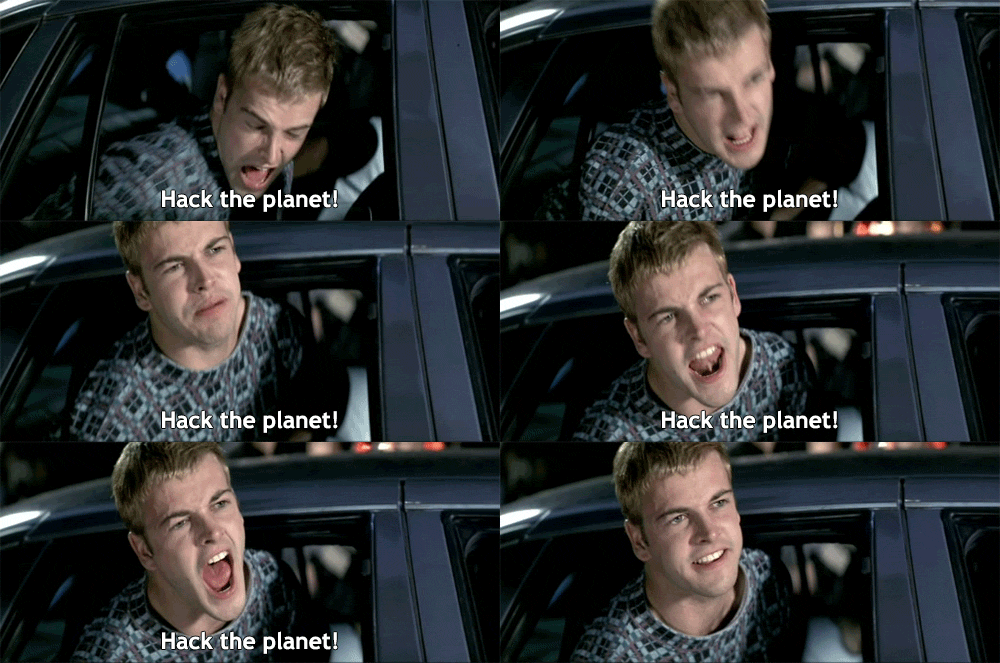
August 11, Scituate: I want to tell you that Hackers totally holds up. Now, you’re going to want to fight me on this one. You’re going to say “uh, rollerblading? techno music? progress bars? HACK THE PLANET?” Yes, I’m telling you, it holds up. It holds up as long as you expect all of this and you tack into it, fist up in the air yelling HACK THE PLANET with a half-grin plastered across your face. This movie totally captures a moment.

Let’s talk about the bad first. Johnny Lee Miller plays a terrible teenager and a worse American. The dialogue is cringe-worthy. The graphic representations of the Internet set the standard for a whole genre of god-awful CGI. The fashion is a mess— the cut-off shirts! And they do indeed do a lot of rollerblading.

Now let’s talk about what’s great about Hackers. This was a time in which Hollywood was digesting subcultures and spitting them back out as single movies. We’ve since shifted this work into documentary series on TV. But in the 1990s we did this with fiction— we gathered up all the clever dog whistle words and subculture totems and we presented the audience with a tame sample of your world, congratulations, you’ve made it. Hackers attempted to capture a whole mess of intertwined movements: proto-rave culture, computer hacking, 1990s NYC in general. And all the totems are there! The hacking part is what captured my imagination when I first saw the movie (well, the first of probably five theater viewings in about two weeks). It was amazing! This was a brief period of time in which having the simplest computer knowledge made you a wizard. A real wizard! Record a few tones emitted by a pay phone and suddenly you were making free long distance phone calls. Toss a few Unix commands at a Telnet command line and you were seeing all sorts of things you weren’t supposed to. Wizardry! And the best part was your parents literally didn’t know how to turn the computer on.

This is embarrassing, but Hackers totally changed my teenage life. My friend Chris and I started: a) rollerblading, b) listening to techno, c) hacking! We went from Andrew and Chris to “phritz” and “spam_i_am” and we became the terrors of a local dial-up freenet service. We got our hands on the rainbow books, we made a red box, and we listened to a ton of Lords of Acid and Prodigy and Orbital.

I can’t say I ever became a very accomplished hacker. The complexity of that sort of wizardry was increasing exponentially by the time we discovered it and I didn’t put the time in to keep up. Our computer science classes were taught in Pascal and C++, but HTML was fast becoming the language we’d need. And as with teenagers, our passions shifted. Like Johnny Lee Miller, we too discovered little Floridian Angelina Jolies and the countless hours spent in front of screens began to diminish. (You know they married, right? Weird.)

But there was a great period of two teenaged wizards rollerblading around in oversized jeans listening to synthetic drum machine beats and this was all inspired by this one pretty terrible movie, a movie that *totally* holds up. HACK THE PLANET!

Yes, you can buy the movie Hackers. And you should.

Sid Meier’s Civilization

This post is in the theme “A Long Waltz Through Nerddom”. Read the first.

August 9, Scituate: Sid Meier’s Civilization is the video game that I have played the longest. I started with Civilization I on our old DOS computer, then played years of Civ II with my best friend Chris (especially after we set up the multiplayer network in his house!). A few years ago I bought Civ IV and found myself re-addicted once again, on planes, in hotel rooms, passing the time on the road. Civilization is one of those games that can keep me up all night, processing orders, moving troops, just fixing a hundred tiny problems.

I still have Civ IV, but that wasn’t going to work for the Thirty-Three Project. I needed to go back to the source. So the first step was finding an old DOS version and then finding a DOS emulator, and then… installing the game to my C:/ drive! What fun, typing in “run civ.exe.” I’d forgotten all about copy protection on those old games; Civilization had its own system and would “test your knowledge” (make you look at the manual), about ten turns in. Luckily I’d memorized all those questions.

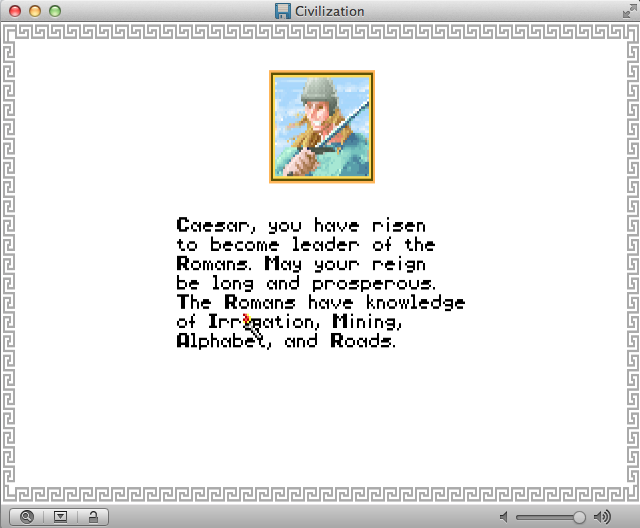
I kicked off as Ceasar, leader of the Romans.

Screen Shot 2014-08-02 at 6.11.27 PM

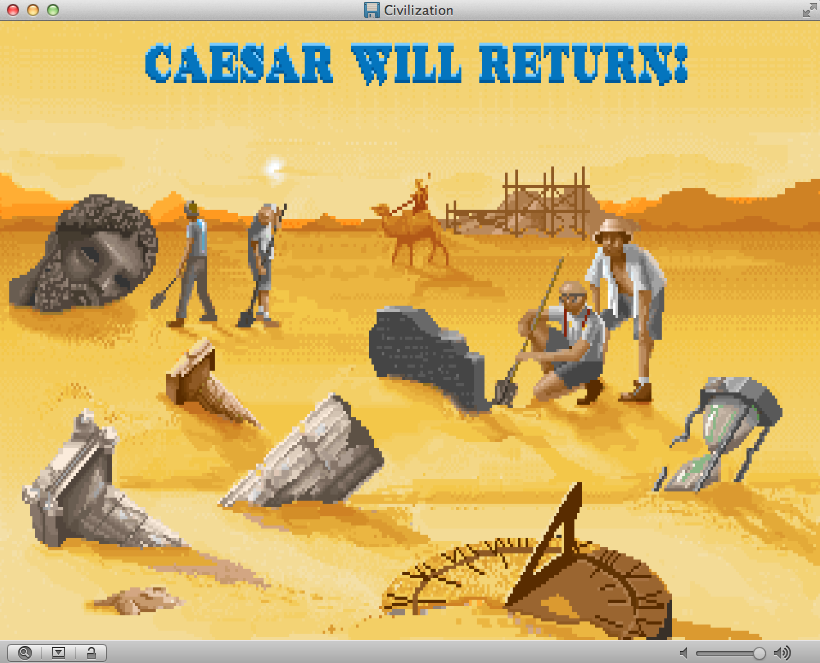
But man, had I forgotten how difficult this game could be. I’d turned cocky with all my Civ IV knowledge, and suddenly here I was in a pared down and vicious game! Quickly: The end.

Screen Shot 2014-08-02 at 6.39.25 PM

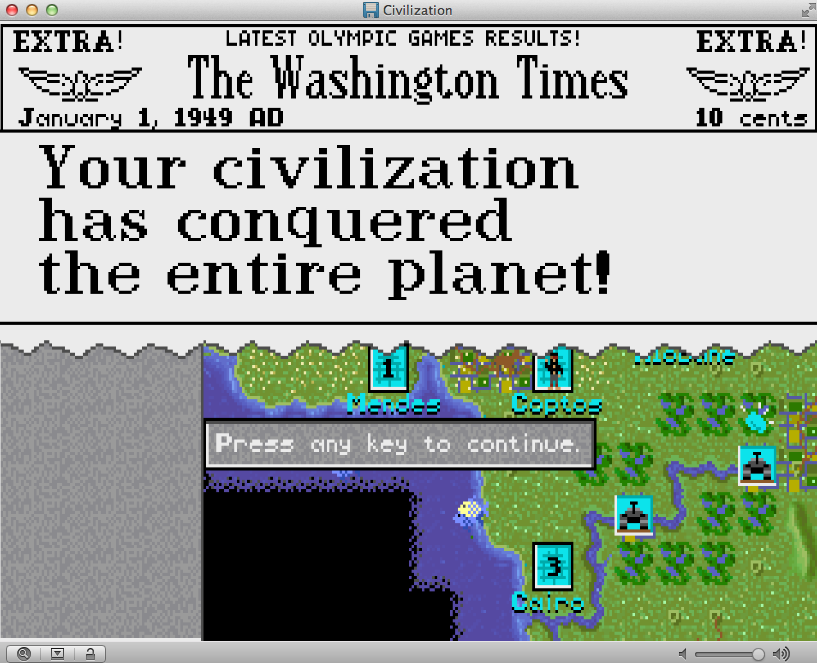
I responded just as young me would: I dialed down the hardness level to “Chieftain”, took my own name, and set myself up on Earth in North America. About six hours later, I’d conquered the world.

Screen Shot 2014-08-03 at 9.22.47 AM

Note that: Six hours! Just like old times, I stayed up until three o’clock in the morning. At 1am I said to myself, “Andrew, it’s late. You should go to bed at 1:15.” Then I repeated that a couple more times. I just couldn’t sop conquering the world, one troop movement at a time.

Screen Shot 2014-08-03 at 9.24.42 AM

I found that I miss much of the simplicity of Civilization I. The only impassable barriers are oceans and lakes (the stopping power of water!), the negotiations are simple, the knowledge building is pretty much single track. There are far fewer knobs and levers at the city level which makes the whole thing frankly easier. I do enjoy some of the later additions like cultural influence, but I didn’t miss them here. I’ll tell you what I did miss: automating troop movement. HOLY CRAP I SPENT SO MUCH TIME CLICKING MOVE BY MOVE. And when you’re moving an army of Armor into Africa from cities across Asia and the Middle East, well that just takes a ton of time. But it was time very enjoyably spent.

Play the old version! Download Boxer and the game.
Play the new version! Buy it here.

X-Men: X-Cutioner’s Song

This post is in the theme “A Long Waltz Through Nerddom”. Read the first.

August 3, New York: We’ve established by now that beginning in early childhood, I was a full-on nerd. But what nerddom would be complete without comic books? Certainly not mine. I read a ton of them, for about five or six years. It was an expensive habit, which kept my tastes limited, but I loved those comic books dearly. I was never much of a collector (I have a few issues in plastic bags somewhere), I was a READER. I devoured comic books, would read them twice or thrice through, I couldn’t wait for the next issue to show up at the drugstore.

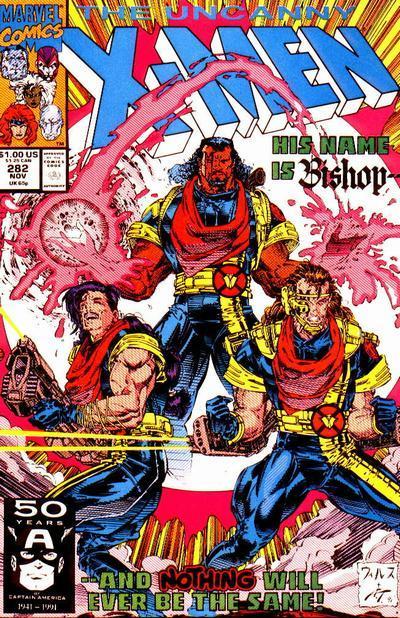
I lived in the Marvel Universe in the 1990s, a world of mutants with crazy powers and heavy-handed messages of tolerance and diversity. I always loved the creativity of the mutant powers in Marvel (and always felt DC was less creative; I never really got into Image). I read primarily X-Men and its derivative titles. I think my first issue of Uncanny X-Men was the arrival of Bishop. For those of you who know your X-chronology: that was when Bishop showed up from the future and tried to kill Gambit because he said he betrayed the X-Men and killed them all. That was a tough pill for me to swallow because Gambit was quickly my favorite (he was from New Orleans).

I spent long nights fantasizing about wanting to be an X-Man. As a teenager I wanted nothing more than to a) be special and b) leave my life behind. Classic nerd. What a dream it would be to be discovered by Charles Xavier and shipped off to upstate New York to live a whole new life of adventure. I would lay in bed concocting the fantasy in intricate detail. I wanted to be telekinetic (the best power, in my opinion, because you could recreate just about all the other powers by working at the molecular level). Gambit and I would be buddies. Jean Grey would teach me how to use my telekinesis. And I thought I would date Shadowcat (Kitty Pryde). She seemed so very sweet (and not in her thirties).

Choosing an X-Men arc for the Thirty-Three Project was a challenge, but X-Cutioner’s Song seemed like the right fit. It was a big, fat crossover right in the middle of my love of comics. (I should note that it was in a subsequent crossover arc— Age of Apocalypse— that I finally gave up on Marvel of the 1990s.) This was a point at which the X-Men universe was getting a bit confused, you could feel it bubbling into too many characters, too much to keep track of. God forbid they threw a new artist at a familiar series, the B characters would be completely unrecognizable. A cross-over arc like this one brought them all together and jumbled them all up.

Reading X-Cutioner’s Song about two decades later I was lost. Who the hell were these people? I remembered the core X-Men, even down to Jubilee. I remembered Stryfe and Cable and Apocalypse. I remembered that there was an X-Force and there was an X-Factor, but so many of their members were complete strangers on the page. It was still a fun read and I do love that 1990s X-Men art, but it didn’t rekindle a love affair.

I think today about being an X-Man and it seems completely terrible. These are adults living on a suburban boarding school campus and they spend all of their time fighting, like physically fighting, other people with their fists. Their fists! Yes, they’re all in fantastic shape. But how boring would it be to have to spend all that time keeping yourself in that condition?

I’d still love to be telekinetic though.

You can buy this arc off the ol’ Internet, just like I did. Don’t ask at comic book stores, they don’t have this one and they will tell you it’s going to cost you like fifty bucks.

Silverchair: Frogstomp

This post is in the theme “A Long Waltz Through Nerddom”. Read the first.

August 3, New York: Everyone has their teenage music. Some of it might be good, might be of epochal importance in the history of music. Much teenage music falls into an age where popular music is beyond redemption (looking at you, poor kids of today). I was lucky to have both grunge and gangster rap in my teenage years. But even in those, there were forgettable albums. I bring you Silverchair’s Frogstomp.

This is perfect teenage music: the band itself is composed entirely of teenagers! Fifteen, sixteen years old and playing a pastiche of the music they loved. Daniel Johns sings like Eddie Vedder, every possible string (bass included) is distorted, just like Nirvana. They were a couple of teenagers making the music that they loved.


Look at how young these kids are!

I listened to this album, on repeat, in my headphones for the entirety of books 1 through 5 of Robert Jordan’s Wheel of Time series. It’s a good collection of books, though not quite great enough to be included here. I was slightly disappointed that this re-listen didn’t evoke any of the imagery of the books.

My dismissals of teenage music aside, this is pretty rad grunge. And they were some talented kids, if unoriginal in their first album. God knows I did worse at fifteen.

Buy yourself some teenage music and sink into head-banging nostalgia.

Wet Hot American Summer

July 27, New York: There are a small handful of movies from which you know every single word of dialogue, every funny gesture, every use of an inappropriate sound effect. Wet Hot American Summer is one of those films for me. Its most innocuous and forgettable phrases have worked their way into my regular lexicon— when Coop follows a muttered “I want you inside me” with “You know, from before”, that latter is a phrase I still work in regularly. These uses began as inside jokes with friends and co-watchers, but now just lurk in my speaking RAM, unavoidably accessed.

This is confusing because Wet Hot American Summer is not the blockbuster cult classic it deserves to be. Where a catchphrase from The Big Lebowski can elicit a knowing chuckle (“Does the Pope shit in the woods?”), the same isn’t true here.

Let’s fix this.

Here are three great reasons to watch this movie:

  • This movie has an incredible cast (Hello Bradley Cooper, Amy Poehler, Paul Rudd, Janeane Garofolo, Michael Ian Black, Elizabeth Banks, etc., etc.) and they seem to be having such fun together.
  • The montages are amazing (particularly the trip into Waterville).
  • Above every other reason I recommend seeing this movie, it is to see this one single scene with the most amazing performance you will ever see Paul Rudd give. It’s cinematic gold.

Buy the damn DVD, rent the damn digital copy, I don’t care how you do it, just get yourself and all your friends up to speed on all the incredible jokes that we can all share chuckles about.

Dune & Dune Messiah by Frank Herbert

This post is in the theme “A Long Waltz Through Nerddom”. Read the first.

July 27, New York: This is a review in two parts. I set out to just read Dune, just as I did at 14. And just like that first time, the dizzying momentum of the first book sent me soaring into the second, Dune Messiah. They are very different books. We’re going to talk about Dune first.

Dune is one of those books that deserves every accolade ever thrown at it. It charts an incredibly detailed and imaginative world, tells you of a possible future rich with detail without getting bogged down in how we got there from here. It comes with Appendices like The Lord of the Rings— the mark of an author who really delved into creation.

When I read it at 14 and even reading it again now, I wanted to be Paul Maud-Dib Atreides. He is an incredible character and so powerful. In my youth, I wanted nothing more than to be touched with destiny and Paul’s story rang that chord for me. In my adulthood, I want to be powerfully mindful, and re-reading Dune made me want to spend more time working on that.

The book moves so fast, though. It almost feels over-edited. I recalled this in the film, but it’s here in the source text too. You leap into the story, zip past the first act in a blink and then you tear through this richly-imagined world with a breathtaking speed of plot. And at the end, when all of a sudden Paul is victorious, you are left wanting more, combing through the appendices for an extension of the narrative. And this leads you to buy Dune Messiah. I did it twice.

After the hectic pace of Dune, you want Dune Messiah to luxuriate in the world on Arrakis, to spread and explore deeper into the concepts breezed through in Paul’s ascent to power. This doesn’t happen. We skip over the dozen years of the great jihad Paul has been trying to avoid and all the growth and construction of his empire right to what feels like its end. Instead of delving deeper, Herbert introduces wholly new concepts, like he’s done with the first world and can’t wait to move on. To read the synopsis of the following books in the sextet, it seems like that happens every time. #3 (Children of Dune) takes place another nine years in the future; #4 (God Emperor of Dune) is 3500 years later! I remember in my first reading I’d planned to tear through all six, but lost steam in the third.

I thought this reading of Dune as The Godfather, the most award-winning book of its day. Dune Messiah also won the Hugo, much like Godfather II also won the Oscar, but we all know which of the Godfather movies is the landmark of American cinema. And we all know how disappointing Godfather III was. I didn’t try to read Children of Dune this time.

But Dune is an amazing book and you should buy it and read it and then restrain yourself at its conclusion!

Star Wars

This post is in the theme “A Long Waltz Through Nerddom”. Read the first.

July 27, New York: How does one rewatch Star Wars? Think about it, it’s a complicated question. You could watch them in release order (4,5,6,1,2,3) or you could watch them in chronological order (1,2,3,4,5,6). Imagine you were showing them to a child for the first time. What a conundrum! The good news is, the Internet has a lot of opinions about this. From these opinions, I chose “Machete Order” (4,5,2,3,6).

Why Machete Order? If you’re interested in the details please read the very long blog post explaining it. But here are the basics:

  1. Episode 4 is the best entrance into the universe, but Episode 6 is by far the best ending.
  2. Vader’s big reveal in Episode 5 does not get spoiled by Episode 3, and instead 2 and 3 serve as an extended flashback supporting Vader’s assertion. It’s possible to believe, ignoring the cultural weight that that reveal has garnered, that Vader is actually lying to Luke at the end of Episode 5 in order to further manipulate his emotions. Then, watching 6 after watching 2 and 3, you’re even more invested in Vader’s internal struggle.
  3. Episode 1 is wholly unnecessary. I watched the five films in this order and was not at all confused at any point. It literally makes no difference that it’s gone. Also, Episode 1 is a terrible film. And while 2 might not be great, 3 is actually pretty good.

The one suggestion in Machete Order that we did not follow was to get Harmy’s Despecialized Editions. Lord, I wish we had. The widescreen versions released in the 90s have all sorts of additional CGI shots (and whole scenes!) or worse, CGI elements plastered into existing scenes. And every single addition is painfully obvious and ridiculously distracting. It makes watching the originals so much less enjoyable.

Otherwise, though, rewatching Star Wars was a blast. It took Jill and I a weekend and change to get through the whole thing, but it was so. much. fun. Star Wars is so pervasive in our culture and so ever-present in reruns on television that you perpetually feel like you just saw the movies, like, last year. Sitting down and watching the whole thing you realize how untrue that feeling is. There was so much I didn’t fully remember, especially from 5 and 6. Rediscovering those scenes and reliving the favorites was awesome. And how cool is Han Solo? I mean, come on.

I would normally link here to an Amazon page to buy these films, but I went through a whole thing with these where I only wanted to digitally rent them and they were unavailable anywhere! So I am going to use this space to recommend you do what I did and borrow them. Special thanks to @hwilson and @suits from my office.

The Dragonlance Chronicles by Weis and Hickman

This post is in the theme “A Long Waltz Through Nerddom”. Read the first.

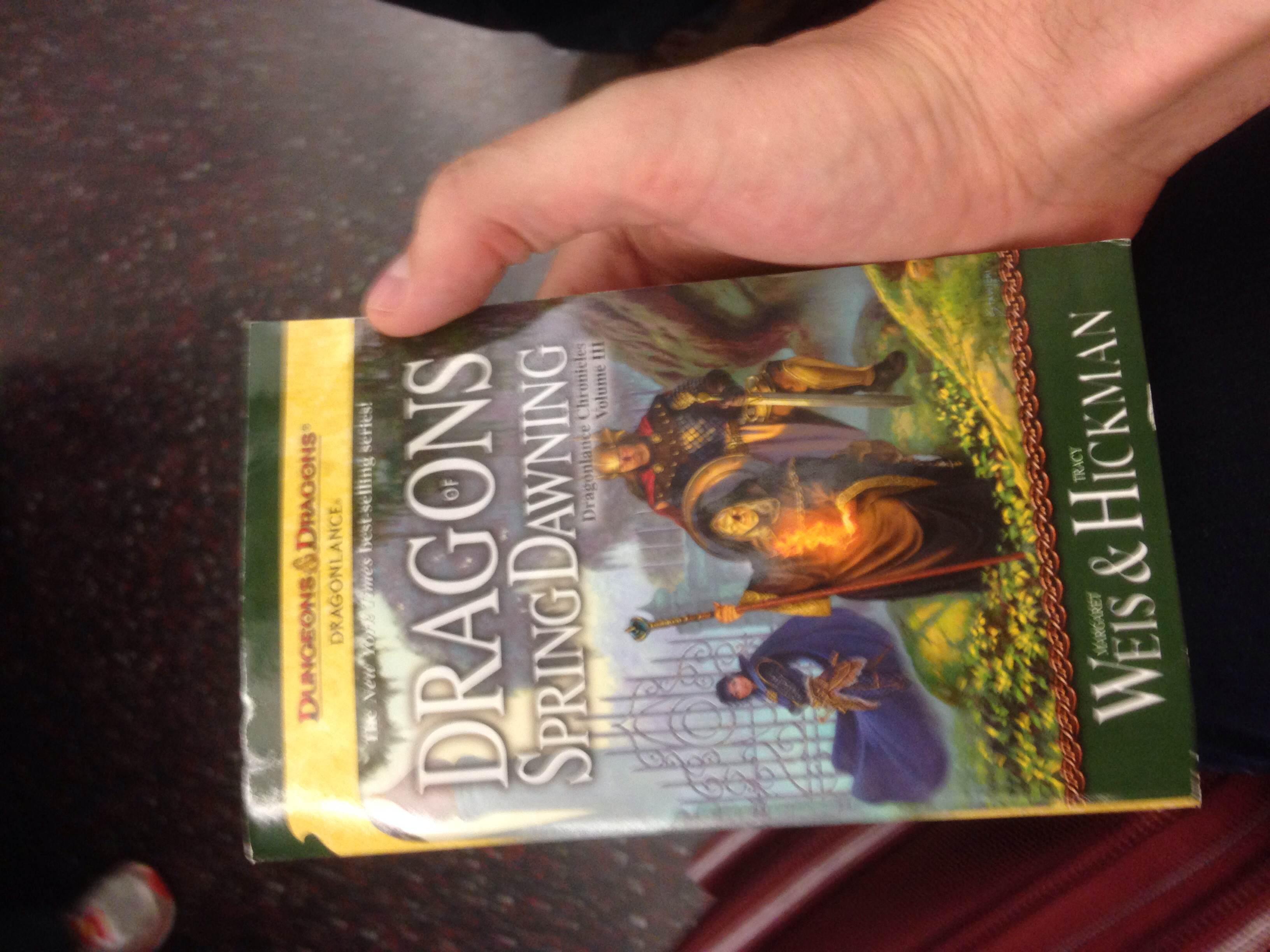
July 26, New York: When I was in San Diego, I went searching used book stores to find this trilogy. Though I was ultimately unsuccessful (and turned again to Mr. Bezos), I made a different discovery: Holy crap, I read a lot of these books. The Dragonlance Chronicles were published by the same folks who produced Dungeons and Dragons, and if you had you asked me I could have perhaps recalled two or three of their trilogies that I’d read. But no, in the dusty back aisle of this little used book store I had a terrifyingly embarrassing revelation: I must have read dozens of these pulpy little mass market paperbacks. Maybe over hundred total books. Trilogy after trilogy after trilogy. Heck, multiple trilogies that were derivative of the one I was seeking!

Let’s talk about The Dragonlance Chronicles. In them, a mismatched fellowship of companions quests across the face of a continent to play a decisive role in the ultimate battle between good and evil. There is an elf, a dwarf, a wizard, a warrior, and they are even led by half-elf (half-man). Sound familiar yet? I deliberately wanted to read this series after The Lord of the Rings so I could be aware of the derivations, and lo, but they are many.

But The Dragonlance Chronicles are something else as well: an incredible advertisement for this universe of Dungeons and Dragons. There were a couple of worlds created around D&D and Dragonlance was one of them. It’s a distinct continent with its own history and cities and races and the trilogy takes you to every possible corner of that world. It’s the ultimate tour of the continent of Krynn and when you’re done reading it, why, call up the other “indoor kids” in your neighborhood and you can explore the world on your own.

I actually kind of love that. These book aren’t incredible works of fiction. But they are a passport into an imaginary world that is designed specifically for you to explore it further, for you the reader to then have your own memorable adventures. The hallmarks of D&D are all over the story: the three moons for the three alignments of good, neutral, or evil; every other chapter is a new quest into a new dungeon; the party is of every character type from mage to rogue; and they meet just about every monster you could find in your own games. I would have loved that experience from so many books that I didn’t want to end— the chance to go live in that universe a while longer. With this and other trilogies, I took the opportunity. I played countless hours of D&D, owned so many of the books and manuals and dice.

I thoroughly enjoyed re-reading these. I tore through them, often stayed up late on accident just to get through another chapter or two. It was just like being a teenager again, but for the difference that these are very embarrassing books to read on a plane or on the subway.

photo1(2)

Embarrass yourself on the subway and remember what it was like to be one of the indoor kids, with these three little page turners!

Tchaikovsky: 1812 Overture

This post is in the theme “A Long Waltz Through Nerddom”. Read the first.

July 26, New York: It’s hard to find a good time in which to play the 1812 Overture on speakers. You could do so if you were beginning to bombard an enemy’s fort with your mighty cannons. You could do so if you were marching your victorious calvary through the city streets before your cheering citizens. You could do so if you were alone in the bathtub with an entire navy of plastic ships and towels on the floor to protect against all the splashing.

Jill and I decided to listen to the 1812 Overture while we played Twilight Struggle. Thankfully the Thirty-Three Project does not prevent me from playing new *board games*, and this one is a doozy. In Twilight Struggle two players play the US and the USSR over the course of the Cold War, projecting influence across the globe and competing in their deployment of the events of history. Our game lasted about five hours, including a location change break in the middle and roughly an hour’s explanation of the rules. Then, deep into the game… TCHAIKOVSKY. And it was perfect. (But for the fact that Jill, who was playing Russia, won shortly after we put this music on.)

photo1(1)

It is no wonder that in my youth I spent much time thinking martial thoughts, if this was the only classic music I let into my repertoire. It set the tone not only for my imagination in those days, but in my taste for classical for the rest of my life— mopey Russians making dramatic music, that’s what I like. And this: over-dramatic and ostentatious, a piece of music that only fits into my current life as the soundtrack to a game of global domination.

Draw a bath, get out the plastic navy, and put this sucker on the Jawbone Jambox. Then splash away, my friend.

The Lord of the Rings by J.R.R. Tolkien

This post is the first in the theme of A Long Waltz Through Nerddom.

July 20, New York: In retrospect, I didn’t have much choice but to become a nerd. As a child, I only fraternized with adults and my only friends were books. I thought much of my own intelligence and spent hours lost in imaginary worlds. It was just a matter of time before I donned the full cloak of nerddom, and when I did, I did so with gusto.

The first I heard of role-playing games was in a Hardy Boys book, perhaps predictably. In each installment Chet had a new hobby, and in this one it was playing some fictional role-playing game with dragons and, er, caves. Intrigued, I convinced some friends to construct a game with me. As pre-teen boys, this game was a Risk derivative that primarily involved destroying one another’s imaginary countries with weapons of increasing complexity. In the end, we’d blown up the planet with nukes mounted on drills and were all arguing about whether any of us had launched a space base from the earth in time. It was a fun afternoon, but a terrible game mechanic. Then I discovered Dungeons & Dragons, and lo! some wise old nerds had already made us a perfect game!

That’s just where it begins, but as a full-bore nerd I’ve:
– Played hours of Dungeons and Dragons, Magic: The Gathering, and even goth-themed role-playing games
– Read dozens (hundreds?) of pulp fantasy novels
– Watched a ton of anime
– Owned whole collections of comic books and multi-sided die
– Fancied myself a computer hacker
– Rollerbladed

So we launch a new theme of the Thirty-Three Project: A Long Waltz Through Nerddom. In this theme, we will explore the lofty heights of nerd material. (Or, imagine yourself exploring a dungeon, and I will be your Dungeon Master, leading you to treasure chests of film and prose.) We begin with the true pinnacle of fantasy fiction.

The Lord of the Rings is an absolutely singular work. I read it young, shortly after The Hobbit. My first experience of The Hobbit was a cartoon or an illustrated version that colored my mental images of the actual book as very cartoonish. Reading along the natural progression into The Fellowship of the Ring, I suddenly found myself in a very, very different world. From the moment the first black riders appear on the road outside of Hobbiton, the cartoon images are gone. Here was a world of darkness and near infinite complexity (hell, it ended with appendices!) rendered in exquisite detail and lovely prose. It blew me away. I tore through these books and then immediately tried (and failed) to read The Silmarillion.

Re-reading these books was a complete treat. Exactly the sort of privilege the Thirty-Three Project is meant to offer. When else in my life would I re-consume 1000 pages of Tolkien? I suspect I appreciated the detail quite a lot more in this reading— how impressive is it that Tolkien created *languages*! Though the one thing that was very different in this reading was that I couldn’t help but imagine the characters as the actors from the movie. They are indelibly tied together in my mind’s eye now. How did I imagine them before when I read as a child? That’s the one thing I wish I could recapture.

You should own this book, presented as a trilogy, but argued by Tolkien to be a single book. Buy it from the Amazon.

Lawrence of Arabia

July 19, New York: Every summer as a kid I would visit my family in Louisiana and spend a couple of days with my grandparents who had both a television AND a VCR. Now, at this time, we didn’t have a television at home, so this was very novel. I would plop down on their couch and feed VHS tapes into that VCR and just be thoroughly amazed and happy. There was a limited selection, and I’d almost always start with the NFL blooper reels my grandfather received from Sports Illustrated. But one trip, the days stretched long and the blooper reels ran out and there was one movie yet unwatched: Lawrence of Arabia. It was two (TWO!) VHS tapes long, but I sat down and I watched the whole damn thing.

I think the only thing I recall from that viewing was that the movie was long. Just unfathomably long. Particularly for a child.

Years later, I watched Lawrence of Arabia again as a film student and then I realized that this film was absolutely majestic. Those incredible shots! Beautiful, widescreen, location shooting.

This is painting with a film camera.

Clear out a whole evening (really, the whole thing) and sit down and watch this on the biggest flatscreen TV you can find.

The Big Lebowski

July 11, From a plane between San Francisco and New York: Every single frame of this film is so incredibly satisfying to watch. From the opening credits set to the “Man in Me” all the way through. It’s a masterpiece of enjoyability. The dream sequences! The Jesus introduction! The everything-that-comes-out-of-Walter’s-mouth! The way that if you watch closely you can see the Dude slowly collecting conversational tidbits from other characters and deploying them in later scenes (“The Chinaman is not the issue here, man!”; “She’s a strumptet, she kidnapped herself!”)

For about a year, right around the time this film was at the height of its popularity, I lived around the corner from the Hollywood Star Lanes in LA where all of the bowling sequences were shot. It became my local bar— I’d buy bottles of Rolling Rock or Budweiser for two bucks apiece and sit in the back and wonder when Vince Vaughn was going to roll in and be super tall and loud. (Not that we ever spoke, Vince and I. But I noted his presence.) This picture (used in the 33 Project list) was taken by Jed Johnson in the back of the Hollywood Star Lanes bar.

23

It was heartbreaking when the city shut the bowling alley down. They argued imminent domain and took the land to build a middle school. There was a vigil in the parking lot that final night, where everyone felt the way you feel watching Donny falling down dead in the same parking lot in The Big Lebwoski. My buddy Dominic left with one of those classic “Holly Star balls” and has it to this day. A memento of a simpler time.

The argument for preserving the Hollywood Star Lanes was to designate it a cultural landmark. It seemed, on the one hand, very Angeleno to try to declare a one out of a site most people had discovered from a film released less than five years prior. On the other hand, ‘cult movie’ or not, it was clear The Big Lebowski was destined to be a cultural touchstone. I hope in thirty years time, the next time one of those AFI Top 100 movies of all time lists is released, that someone writes the post-humous essay equating the destruction of the Hollywood Star Lanes to the destruction of the original Penn Station in NYC. And that we all, at that time, recognize that The Big Lebowski might just be the greatest film ever made.

Buy this film, watch it, and walk around all the next day with “The Man in Me” in your head and a smile on your face.

No God but God by Reza Aslan

July 11, On a flight from San Francisco to New York: I first read this book in 2005, as the sectarian battles in Iraq were first beginning to dominate the headlines. We were four years into a War on Terror, four years into an intensive national Othering of Muslims, and here was Reza Aslan arguing Islam was a beautiful religion with a storied past and rich progressive traditions. He offered an American audience this humanistic account of a faith that was being vilified in our national conversation. Without evangelizing, without asking the reader to accept any piece of this religion as faith, Aslan offered a historical account of the Prophet, the Quran, and the founding of a system of belief. And perhaps most notably, Aslan presented the contemporary struggles in the Muslim world (and indeed even the September 11th attacks) as part of a “Muslim Reformation”— a bloody battle for the soul of a religion.

In No God but God, Aslan argues for the principles of the Prophet in Medina, making a case for tolerance, for a world in which other religions are respected and protected, and where class and gender are not inherent divisions. And it is only after this telling that he describes the rise of the Wahhabists in the Arabian Peninsula and how their version of Islam (followed by notable adherents such as the late Osama bin Laden) is only one version of the faith. In 2005, No God but God was an incredibly well-timed and important book.

It was interesting re-reading this book in 2014. It was a first for me: a book of contemporary non-fiction that has begun to feel dated since when I first read it. When Aslan wrote it, Egypt’s regime had not yet fallen, Osama bin Laden was still alive, and a different war was raging in Iraq. And then during the timespan in which I re-read the book, we had a group declaring the return of the caliphate. Slightly out-of-date or not, you should buy and read this book to help understand some small part of what in the hell is happening in Iraq and Syria right now. Just as it was so valuable to read during the 2005 sectarian battles in Iraq, this is still an incredibly important book. I think both for the history and context of Islam, and also for Aslan’s thesis of a Reformation.

Please go buy this book and read it. I cannot recommend it enough.