Category Archives: Music

Silverchair: Frogstomp

This post is in the theme “A Long Waltz Through Nerddom”. Read the first.

August 3, New York: Everyone has their teenage music. Some of it might be good, might be of epochal importance in the history of music. Much teenage music falls into an age where popular music is beyond redemption (looking at you, poor kids of today). I was lucky to have both grunge and gangster rap in my teenage years. But even in those, there were forgettable albums. I bring you Silverchair’s Frogstomp.

This is perfect teenage music: the band itself is composed entirely of teenagers! Fifteen, sixteen years old and playing a pastiche of the music they loved. Daniel Johns sings like Eddie Vedder, every possible string (bass included) is distorted, just like Nirvana. They were a couple of teenagers making the music that they loved.


Look at how young these kids are!

I listened to this album, on repeat, in my headphones for the entirety of books 1 through 5 of Robert Jordan’s Wheel of Time series. It’s a good collection of books, though not quite great enough to be included here. I was slightly disappointed that this re-listen didn’t evoke any of the imagery of the books.

My dismissals of teenage music aside, this is pretty rad grunge. And they were some talented kids, if unoriginal in their first album. God knows I did worse at fifteen.

Buy yourself some teenage music and sink into head-banging nostalgia.

Tchaikovsky: 1812 Overture

This post is in the theme “A Long Waltz Through Nerddom”. Read the first.

July 26, New York: It’s hard to find a good time in which to play the 1812 Overture on speakers. You could do so if you were beginning to bombard an enemy’s fort with your mighty cannons. You could do so if you were marching your victorious calvary through the city streets before your cheering citizens. You could do so if you were alone in the bathtub with an entire navy of plastic ships and towels on the floor to protect against all the splashing.

Jill and I decided to listen to the 1812 Overture while we played Twilight Struggle. Thankfully the Thirty-Three Project does not prevent me from playing new *board games*, and this one is a doozy. In Twilight Struggle two players play the US and the USSR over the course of the Cold War, projecting influence across the globe and competing in their deployment of the events of history. Our game lasted about five hours, including a location change break in the middle and roughly an hour’s explanation of the rules. Then, deep into the game… TCHAIKOVSKY. And it was perfect. (But for the fact that Jill, who was playing Russia, won shortly after we put this music on.)

photo1(1)

It is no wonder that in my youth I spent much time thinking martial thoughts, if this was the only classic music I let into my repertoire. It set the tone not only for my imagination in those days, but in my taste for classical for the rest of my life— mopey Russians making dramatic music, that’s what I like. And this: over-dramatic and ostentatious, a piece of music that only fits into my current life as the soundtrack to a game of global domination.

Draw a bath, get out the plastic navy, and put this sucker on the Jawbone Jambox. Then splash away, my friend.

Tori Amos: Boys for Pele

This post is in the theme “My Aquatic Childhood and my Father the Pirate”. Read the first.

June 29, New York: I haven’t listened to Tori Amos’ Boys for Pele since 1996. It was probably September 4th when I played it for the last time. My father died on August 31st.

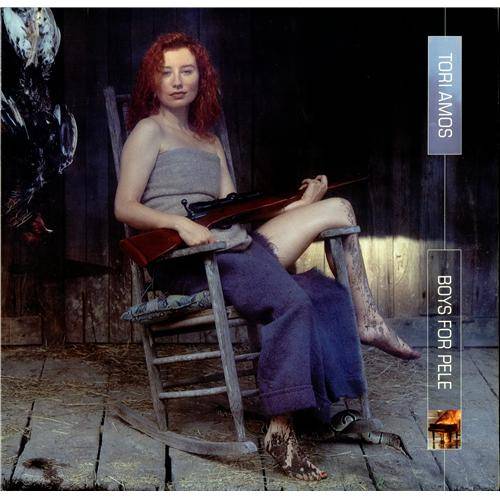
I did not consciously choose Boys for Pele to be the soundtrack to the early mourning period following my father’s death. It happened to be the album I had on repeat at the time. As a teenager, I listened to albums in constant loop; I would let a phase in time imprint itself upon an album and then I would lock it up and move on to the next. Boys for Pele received this treatment for the most extreme of phases. A titanic outpouring of emotion locked up in 18 songs.

August 31st was a Saturday and we were planning to go sailing in the afternoon. My Dad had been working on disassembling and reassembling a watch at the kitchen table. At some point, he went upstairs to lie down and then shortly thereafter we heard a loud thump. You don’t know a dying body when you see one for the first time. The wheezing, rattled breath. We called 911 and the ambulance raced over and my mom and I got ready to go to the hospital. We were frightened but not worried. We were sure he’d just taken a spill, knocked himself out. Here was a man of 43, a healthy husband and father, a stingy son of a bitch who was going to be so pissed when he woke up in the hospital owing money for the ambulance. My mom and I shared a nervous laugh about that in the car.

There is a room in hospitals called “The Quiet Room”. It’s a calming measure for extreme circumstances with a one-time use per occupant. It was my first time so I didn’t know what was coming. The doctor, near to my father’s age, was shocked herself. Kept asking questions about his smoking and rushing through the actual what of it all; it didn’t really sink in for us for a long time. He was dead. Felled by a heart attack. Dead and gone from our lives forever on a sunny Saturday before Memorial Day.

We went home and I went into my bedroom and I turned on Tori Amos’ Boys for Pele for the next five days and imprinted all of the emotions of that weekend into those songs. We talk about music as a powerful recall. This is one album I live in fear of. I have left coffeeshops when I heard the first strains of “Caught a Lite Sneeze”.

So today, a summer Sunday, I am listening to it again.

Deep breath. Here we go.
I thought for certain I was going to sob my way through this album, but it was hardly that climactic. I had a lump in my throat from the moment “Horses” began, a wariness like a darkness had descended upon a woodland walking path. But I only teared up a few times: “Marianne”, “Not the Red Baron”. This is not a mournful album. I remembered it poorly and expected a series of dirges, but there are hard drum beats and lighter ditties. There is though much darkness stitched through it (I discovered this album in a period that was the closest I ever came to a goth phase). Listening as an adult, I spent a lot of time appreciating Amos’ talent. And I spent most of this time feeling terrible for blaring this record on repeat for four straight days in a house of mourning. Hell, I just didn’t know what else to do. This was, at the time, how I experienced emotion. A few days in, my friend Darwin came and brought me to get ice cream. Darwin was the only one who knew what to do, Darwin who came from a large extended family, he’d seen death come knocking many times. Mourning was a routine. I’ve now written a few more eulogies in the time since, but that one, that first one I wrote listening to this album on repeat, it was brutal.

Dan Fitzgerald was a great dad. I was damned lucky to have him while I did. The formative years that came after he passed, formative for age and the incident itself, they tore through me. I like to think I came through those years stronger. And I don’t believe in regret or second-guessing the past. But I would give anything for one more warm Sunday afternoon with Dan Fitzgerald. Just to catch up and talk, preferably on a sailboat, a light breeze pushing us through the waters of the Gulf.

This post concludes the “My Aquatic Childhood and My Father the Pirate” theme. Next up is “A Long Waltz Through Nerddom.”

The Beatles: The White Album

This post is in the theme “My Aquatic Childhood and my Father the Pirate”. Read the first.

June 28, New York: Of all the songs I could have loved first from this album, “Rocky Raccoon” was the one. Dad introduced me to The White Album, played all two records/four sides for me on his Philips “Super Electronic” turntable and his big silver Marantz amplifier. And “Rocky Raccoon” stuck in my head. It was for that song that I first learned to read the grooves in a record so as to gently place the needle at the start of a song. The White Album was one of the few albums for which I would power up Dad’s stereo on own, before he’d come home from work. This was after I’d bought a CD player, which made all of the actions of Dad’s stereo seem very manual.

The White Album was always worth the effort. Cranking up the volume on “Back in the U.S.S.R.”; singing along to “The Continuing Story of Bungalow Bill” and “While My Guitar Gently Weeps”; dancing to “Birthday”; crooning to “Honey Pie”; wondering at “Revolution 9”. Bits of this album have stayed persistent throughout my life: for years I beat through whatever malaise was afflicting me on my birthday by waking up to “Birthday”, a guaranteed method of putting the blues at bay. I, like surely thousands, had a brief crush on a girl name Sadie that had me singing “Sexy Sadie” drunk to myself at college parties. I can still sing it (and more than half of the other songs on this album) by heart: “Sexy Sadie / what have you done / you’ve gone and made a fool of everyone.”

There are legacies a father leaves for his son, the things he is expected to teach him: how to shave, how to fix a car, etc. My Dad passed before he could pass those things on, but he did teach me great music and he left me the records. This album is the jewel of my inheritance. There are a lot of classics in my Dad’s collection (Blood on the Tracks, Beggars’ Banquet, and more) but this is the one that I always returned to on vinyl. I still have that old Philips record player. It’s never plugged in, but one day it will be. And The White Album will be the first record I put on.

You could, I suppose, order yourself a Mono vinyl version of this album. If you were so inclined.

Duane Allman: Anthology

This post is in the theme “My Aquatic Childhood and my Father the Pirate”. Read the first.

June 8, New York: I love the way this album begins. Duane Allman’s guitar sings like a vocalist and you dive right into the blues as sang by B.B. King. Much of the album consists of covers, often far surpassing the originals (“The Weight” as sung by Aretha Franklin!) and Allman does deft work on the guitar. Wilson Pickett’s “Hey Jude” is a masterpiece— my absolute favorite version of this song. As if Pickett’s had always been meant to sing it, the song was just waiting for him to come around to it.

This album sat in my Dad’s record collection, scrawled with his initials in Sharpie: “DJF”. It’s a fun things about my Dad’s collection that no matter how many amazing albums are contained within, they’re protected from my ever selling them by those three black letters like a sigil or a magickal ward. Anthology is a great one to listen to on vinyl and the physical product itself is rewarding— nothing like a two-disc LP to make you feel like you’re really settling into some powerful listening.

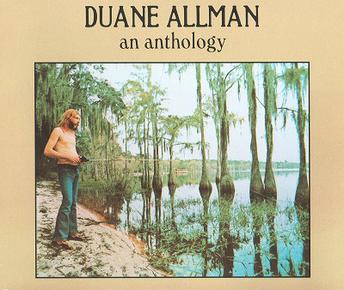
Dad had always wanted to learn how to play blues guitar like Duane Allman. Look at Duane with his long hair in the swamp on the album cover— that totally could have been Dan Fitzgerald! One time in college his roommate Skip taught him to play one song on the guitar: “Your Cheatin’ Heart”. He couldn’t sing for shit and my Mom said the guitar-playing made Skip despondent. But every now and again Dad would put on an album like this one and listen to the blues wash right over him. It was a path unexplored, an ambition unfulfilled. When I was 14 my Dad bought me an acoustic guitar for Christmas. It came with the classic Dad Offer: learn to play the acoustic well enough and you’ll get an electric (I imagine roughly half of all Dads made that offer to their teenagers at some point). It turned out guitar was not my thing either. At that age I was not good at being really bad at anything, I found it too frustrating. My fingers had to learn not just the chords but dexterity itself and my pick hand had to learn not just strumming but the patience to do it ten thousand times, not just for five minutes until boredom overtook me and my mind wandered back to books.

When my Dad passed I remembered very fondly the Christmas he’d given me the acoustic guitar. That morning or shortly thereafter I remember him telling me about his unfulfilled ambition to learn to play a mean blues guitar. I remembered this later because it was the first time in my life I realized ambition had to be finite, that that was a part of mortality. You could not be all things, do all things. You had to make choices. And the time could still run out on you before you could cross everything off your list.

The year he died, my Dad and I had been talking about circumnavigating the globe. We had long since moved back onto land, and while we sailed for weekends or week-long vacations, my Dad longed to capital-l-Leave again like he’d done from Louisiana. Sail off into the sunset, quite literally. We would muse on the back porch about courses we would chart, the length of the trip and the right time to take it with my school. The vague plan was to do it between high school and college. We picked the points along the trip Mom would most like to join us, but the rest of the trip would just be father and son. This was a perfectly reasonable grand ambition. Perhaps my Dad never could have played guitar like Duane Allman, but he could have damn sure sailed around the planet with his teenage son. Could have but for the clock running out. I guess that’s why they call it a ticker.

After my Dad passed I tried a handful of other sentimental times to learn the guitar but never had the patience for it. I eventually realized I had to choose the things I would do with my life. But every time I listen to Duane Allman play guitar I think about my Dad and paths not taken. The courses not charted.

With this album, there is actually a chance you’ve not heard it before. I highly recommend you download these MP3s and put your headphones on for a little while.

Led Zeppelin

This post is in the theme “My Aquatic Childhood and my Father the Pirate”. Read the first.

June 7, New York: I did something rare the other day. I was alone in a hotel room and I put on the best headphones I own, laid down on the bed, and just listened to music for the next 45 minutes. I never do that, music is always in the background for me, but it seemed like Led Zeppelin required it.

AND HOLY CRAP THIS ALBUM IS AMAZING.

Part of the inspiration for the Thirty-Three Project comes from a friend of my friend Joe Maidenberg. Joe’s friend felt that he had been over-exposed to Led Zeppelin in his life and that that had cheapened the music for him. So he took a monastic vow to listen to no Zeppelin for ten years. Ten years! He would never put it on, if it came up in shuffle he’d skip it, if it came on in a room he would politely excuse himself. Until one day ten years later he threw a party and he listened to Led Zeppelin as if wholly new. And lo, but it blew the man’s mind.

I’m having more of that happen with non-musical media, but still this was an incredibly special experience. To lay back and listen to nothing but this album is an enormous treat. Everything about it, every single song, is just perfect. My Dad and I had a moment with this album where he caught me singing along to some Led Zeppelin radio single (probably off of IV; everything is off of IV) and he sat me down in front of the record player and made me listen to this in its entirety. My, how one tiny mind was blown that day.

Over the next few days I listened to the rest of the discography as well and it was all spectacular. Hard-charging “Immigrant Song” and “Achilles Last Stand” are old favorites. The Tolkien references throughout were welcome as I was re-reading The Lord of the Rings. “Thank You” we played at my Dad’s funeral.

But the first album is just… is just… I think it might be the most perfect album.

You own it already. But if you don’t, buy it immediately. Then listen to it with your headphones on and grin like goon the whole damn 45 minutes, just like me.

Jimmy Buffett: Boats, Beaches, Bars, & Ballads

This post is in the theme “My Aquatic Childhood and my Father the Pirate”. Read the first.

May 29, San Diego: The title of Jimmy Buffett’s greatest hits album is, appropriately, Songs You Know By Heart. Any fan of Jimmy Buffett has lived many years of their life scored by his music and knows every note inside and out. But also, any true fan of Jimmy Buffett knows that the real treasure horde of Buffett songs is in the box set Boats, Bars, Beaches, and Ballads. Yesterday, I cued that sucker up to shuffle and let it play.

The very first song is exactly why Buffett features in my life at all: “Son of a Son of a Sailor”. That was my Dad. That’s me. From a long line o sailors. And we had a purer connection to that soft country twang and steel drum rhythms than 99% of other aspiring parrotheads. We would listen to these songs on worn-out cassettes in anchorages across the Caribbean. Myself, in various stages of tiny, my Dad with his deep-hued suntan and his arm around my Mom, more than likely with her sunglasses on. Sitting in the cockpit of the “Mimi”, listening to the music and musing.

We lived on the “Mimi” for about six years before we moved to land. We eventually sold her, but after some time my Dad found another boat, named her the “Mimi” and while we didn’t live aboard again, we would still spend some time cruising. Whether in a stained teak sailboat cockpit or poolside at a condo, this music offered us a tie back to the ocean. Back to our life on the seas.

I don’t know if this music is any good or not (well, I’m pretty sure it’s not good) but it’s scrawled too indelibly into my memory to ever let it go. As the son of a son of sailor or just the son of a pirate 400 years too late, this is for better or worse the music of my people.

You, the secret parrothead in the corner. You should probably go and buy the boxed set, shouldn’t you?

John Prine: John Prine

This post is in the theme “My Aquatic Childhood and my Father the Pirate”. Read the first.

May 26, In flight: If you’d asked me at twenty-four to name a John Prine song it would have been a struggle. His name would have reverberated, perhaps, but I couldn’t have sung to you every word of “Sam Stone” by heart. Or at least I thought not until one afternoon, in my friend Jed’s car, when a cover of “Sam Stone” came on the radio and every single one of the lyrics welled up inside me like groundwater after a flood.

This is an important part of the Thirty-Three Project for me, discovering these pockets of memory locked up in media.

Dad spent a lot of time trying to convince me that country music was not what it was in the 1990s. One time Dad asked me “Why do you listen to that crap?” (‘That crap’ being hip hop, the same as it was across most American suburbs.) And trying to connect with him on some adult level I told him it was rebellion, that I liked the rebellion of it. Well, he had a response for that: Country was rebellious! In the era of Billy Ray Cyrus I couldn’t imagine a more ridiculous statement. And then my Dad tried and tried to introduce me to music like David Allan Coe and Willie Nelson and, well, John Prine. These guys cursed, did drugs, and sang about breaking the law. Totally unlike the plastic pop radio country we had at the time.

My father, in his twenties, sort of looked like John Travolta in Urban Cowboy. And I suspect there was a part of him that really wanted to live that. He kept a pair of cowboy boots throughout his entire adult life, he looked completely at home shaded by a ratty cowboy hat. But he wasn’t knocking over liquor stores and stealing TVs. And he didn’t act out as badly as Travolta, who always seemed to me to be a bit of prissy baby in his tight Wranglers.

Of all the country albums Dad played on repeat in the background while I was growing up, this one made the list because it surprises. You no longer hear country music with lyrics like “Your flag decal won’t get you into heaven anymore. They’re already overcrowded from your dirty little war.” This album is so sweet, sometimes sad, always sincere. Also occasionally quite funny.

There’s a hole in Daddy’s arm where all the money goes. Jesus Christ died for nothing I suppose. Little pitchers have big ears, they don’t stop to count the years. Sweet songs never last too long on broken radios.

That last line can still make me tear up if caught unaware. It’s a melancholy sumbitch, this album. Totally canon-worthy. Thanks for the tip, Dad.

Buy John Prine, John Prine on the internet.

Notorious BIG: Ready to Die

May 11, New York: I should begin with the admission that I had two very different first listens of this album. The first was at roughly 13 (as indicated on the Master List) and I was every bit the white 90s teenager who heard only the violence, the sexy interludes, the gunshots. The patina of gangsterism. The second was when I rediscovered hip-hop in college, separate from its existence on Top 40 stations. And in that listen I heard the presence of a lyrical master. It was then that “Warning” became my favorite song on this album. The laconic ease of rhymes like: “there’s going to be a lot of slow-singing and flower-bringing if my burglar alarm starts ringing”.

I love this album because it seems like Biggie is in on the joke. Every song is about the narrator as a master criminal, as a sex [master], but yet the narrative of the album is exactly that— a narrative. A story which though written in the first person, need only be taken as loosely autobiographical. I love transitions like the end of “Gimme the Loot”, in which the narrator is gunned down, into “Machine Gun Funk” which opens with the line “So, you want to be hardcore… talking about gats in your raps.” The whole album feels self-aware.

And then there’s “Juicy”. Which is inarguably one of top ten best songs of all time period.

There are all sorts of gratifying little moments scattered through the album. A perfect verse that leaves you stunned, the lyrics you always find in the back of your head. (“Yeah motherfucker this is Stephanie” is something I mutter under my breath at least half the times I’m waiting for someone to pick up the phone.) The hard cut from the mock interview “SO where you from?” “Brooklyn.” [CUT] BIG POPPA. So good. And the album is barely marred by the frequent skits of mid-90s hip hop albums (that I always disliked)… in fact the “Intro” is even kind of brilliant.

Why couldn’t this guy have lived forever? Or at least past 24(!) years old?

You already own this album. But if you don’t, that is a criminal offense and is only reconciled by purchasing it immediately.

Randy Newman: Good Old Boys

This is the first post of the theme “My Aquatic Childhood and my Father the Pirate”.

May 11, New York:

“We got no neck oilmen from Texas. Good old boys from Tennessee. College men from LSU, went in dumb come out dumb too. Hustling around Atlanta in their alligator shoes. Getting drunk every weekend at the barbecue.”

My parents were born and raised in southern Louisiana. Mostly New Orleans. They went to college in southern Louisiana and settled in a bayou exurb out in West St. Charles Parish split by a railroad track and bounded on one side by the Mississippi River. They were born of the fifties and children of the sixties, just a few years too late and a few hundred miles too south to be full-blown hippies. But they had their version: caught up in the Led Zeppelin-fueled post-Altamont Southern hippie wave. They were high school sweethearts who came from good families, they went and got professional degrees and good jobs, but they also snuck off to some rock shows and drank their fair share.

Southern Louisiana is a funny place. It’s sure as hell the south. But it’s also Catholic, which means it’s the one place in the south where you stand no danger of running into a blue county that won’t sell you a drink. No, in New Orleans, they fought the raising of the legal drinking age to 21 and they still let you cavort through the streets of the French Quarter with an open container. Hell, they don’t even call them counties anyway, they’re parishes. My father took this with him when he left; he was proud to have been a product of Southern Louisiana and was never afraid to argue with a bar bouncer about the logic of open container laws and the philosophy of the “Go Cup”.

I grew up listening to Randy Newman’s Good Old Boys from an age at which I was far too young to appreciate its irony. It would play on in the background in our various homes, and I think for my father, it reminded him of the South that raised him. “Rednecks” especially, which I remember fondly singing along too. Daniel J. Fitzgerald, DVM reveled in being a redneck. All the way until his death at 43 he kept a certificate on the bathroom wall proclaiming him a “Registered Coonass” (a cajun, bayou redneck). “We drink too much down here and we laugh too loud.” My father was a damn good veterinarian, but he also always wanted to be a good old boy and he never missed an opportunity to say “I went to LSU… went in dumb, came out dumb too”. My dad loved that song— not necessarily as an anthem, but somehow in our house it seemed to play like one. And I was so wildly unaware of the words I was singing along to, that I remember being disciplined in school for loudly declaring “WE’RE REDNECKS, WE’RE REDNECKS, WE DON’T KNOW OUR ASS FROM A HOLE IN THE GROUND.” Hopefully they didn’t let me finish the verse.

As an adult, “Good Old Boys” is everything I love about the South. It’s beautiful and it’s conflicted. It’s earnest and it’s irreverent. It’s terribly blunt and it’s beautifully subtle. My heart soars for “Kingfish” and how Huey P. Long “looks out for shit-kickers like you”. My eyes still tear up at “six feet of water in the streets of Evangeline” which played in my house on repeat during the weeks of Katrina. And “Rednecks” always makes me think of my Dad, his “coon-ass” certificate, and his LSU degrees. I wonder how he felt about Lester Maddox, truly. “Well he may be a fool, but he’s our fool.”

Treat yourself to some Randy Newman.

Shostakovich: Op. 40, Seventh Symphony, Op. 110

I’ve long had a thing for the Russian composers. If you look back across the Thirty-Three Project list you’ll see three of them, but no Bach, no Mozart. I don’t know where my fascination comes from— though in this case it’s quite clear. I discovered Dimitri Shostakovich thanks to William K. Vollman and his Europe Central which fictionalizes the life of the composer with exquisite and haunting beauty. (Read more about Europe Central here.) For this reason, I cannot separate these notes from the words that describe Shostakovich’s life in Leningrad and later, in Moscow.

Dmitri Shostakovich

Opus 40, the Seventh Symphony, and Opus 110 are the three acts (three movements) into which Vollman divides Shostakovich’s life so those are the three works I’ve listened to the most intently. Op. 40 with its almost optimistic tones just barely tinged with the hints of despair to come. The Seventh (“Leningrad”) Symphony with its earworm of a “rat theme” and percussion like siege guns. And finally Opus 110, which I listened to as I read its chapter and cried and cried and cried.

In the chapter, Vollman quotes the dissident Solzhenitzyn in calling Shostakovich “a genius in chains” as his work was constantly previewed an reviewed and judged by the Soviet State. And yet he kept composing. What incredible music.

Here’s a playlist of the three pieces together.

Belle and Sebastian: If you’re feeling sinister

March 10, New York: (Note, I did the listening to this album a week ago on my flight from New York to London).

I spent three years of my life not listening to Belle and Sebastian and I couldn’t tell you why. At some point in my sophomore year of college it seemed like all of my friends were listening to this album and it became a point of pride for me, a part of my burgeoning adult identity, to eschew its advances. It was attached somehow to an effort to bring masculinity more to the fore— a period marked by a penchant for cheap whiskey and unflitered cigarettes. But I think I probably always knew that my friends were right (literally none of them joined me on my anti-Belle and Sebastian crusade) and now I love love love this album and I hate the wasted years I missed not listening to these songs.

If you’re feeling sinister is such a beautiful album for a Sunday morning, even though I’m spending this one above the Atlantic. It’s like a light afghan you pull from the back of the couch when you lay down with your first cup of coffee and begin to ease into the day. I used to actually fall asleep to this album and The boy with the Arab Strap they were so familiar and comforting to me.

I’m so happy I finally came around on this album. It’s been a beautiful soundtrack to so many Sundays past and so many Sundays yet to come.

You can buy this album, like all things in this world, from Jeff Bezos’ little digital corner store.

Boyz II Men: II

Just as I was popping my earbuds into my computer, I looked at Jill and said “I’m only going to listen to this one once through.” I gave her the option of speakers or headphones. She chose the latter. But then I hit play and my toes were tapping less than a minute into the first song. Crisply polished production by some dudes who are actually really talented singers. I paused the album and grabbed ‘the good headphones’, which did not escape Jill’s notice. “It’s really good!” I exclaimed.

The mental image that’s persisted in my memory from Boyz II Men: II is sitting on the edge of my bed, giving the album a first listen. And those first two tracks really took me away. I loved 90s R&B like a good suburban pre-teen. I’d sing along, but only when alone. (One time I recorded myself singing “If I Ever Fall I Love Again” by Shai with my headphones on and all you could hear was my voice and all you could hear was how horrid it was.)

Of course the content is absolutely disposable. “Thank You” to the fans into “All Around the World” about touring (with another shout out to the fans). “U Know” seemed totally skippable and I began regretting subjecting myself to this album (of all those albums!) on an otherwise lovely Sunday afternoon. Suddenly there was a grown man rhythmically whispering to me “Just take a minute and catch the vibe” through the good headphones! Deep in the fifth track I felt like I’d begun an exercise in endurance. I could outlast this album, certainly this treacly song about depression. The first truly beautiful moment on the album comes in the interlude “Khalil”. Just a little piano and four dudes singing beautifully.

Finally on track 9 the hit parade begins with “I’ll Make Love to You”, and my mental lens shifts to awkward slow-dancing with hands on hips (or butts for girlfriends!). The stronger remembrance here is cheesy later-teenage Andrew who loved to sing this song to the ladies: “Throw your clothes… (Throw your clothes!) On the floor… (On the floor!)” And then I found myself singing along to each and every word (well, mouthing along, to spare my poor wife the aural torture of hearing me try to sing these notes). I became quite the ham in my later years of high school, and Boyz II Men helped provide a lot of the material.

I’m as embarrassed by my 13 year old taste in music as anyone, though I take some small solace in the fact that these guys really were talented.

I think the a capella “Yesterday” at the end of II is just beautiful. Its lack of production helps it stand the test of time, and you hear their vocal talent really shine. It was the only song on the album I played twice.

The Rushmore Soundtrack

2/4/14— On an Amtrak Acela from Washington to New York: Who doesn’t love this album? Soundtracks for me, prior to this age, were the albums that featured new anthems from artists I already loved. Boyz II Men’s “End of the Road”? Boomerang Soundtrack. “Big Empty” by Stone Temple Pilots? Soundtrack to The Crow. But Rushmore— both the movie and the album— hit me at a funny point in my life. I had just begun looking back in time for new music instead of to the bleeding edge of the present. And lo, then this Wes Anderson character provides a detailed treasure map to some buried secrets in the past. In later years I was often a little embarrassed to have first discovered a song through a movie soundtrack, but Rushmore fell into a time in which I could just enjoy this mixtape from the Wes Anderson library with wild abandon and toe-tapping enthusiasm.

Upon a listen: This soundtrack is so good that it is wholly distinct in my memory from the movie itself. The scenes don’t roll by with the songs. (I can still visualize the 3-4 shots in the The Crow when they played “Big Empty” out the window of a passing car.) The songs themselves are experiences in my younger years, they bring with them an entirely different emotional feeling than just the film itself.

And the truth is that even today, I couldn’t dig the right songs out of my own figurative crates to piece together a soundtrack this good. My heart soars with “Making Time.” This song from The Who: “A Quick One While He’s Away” is so good! A little mini-epic. This song (and really this whole album) makes me want to disappear for a year into the English Invasion. “You are forgiven! You are forgiven! You are forgiven!” An enthusiastic orgy of insistent drums and full-throated guitars.

I forgot the two jazz standards! “Blinuet” and “Rue St Vincent.” They’re so distinct from the rest of the album, but yet both wore deep, deep grooves into my memory. Every note seems a familiar caress. I think with each of these individual tracks, I would either “repeat one” or steal them away from the soundtrack into mixed playlists with a different temperament.

And the album ends just perfectly. “Oh Yoko”, of course. This song is stitched through the lives of just about every person I know my age and this one album is the reason why. We all knew John Lennon, we all knew “Imagine”, but this song, this song was a special gift from Wes Anderson to us. Lying in our Sunday morning beds with girlfriends and boyfriends talking about all the things the future could turn out to be. And then the very next weekend we’re all slow-dancing to “Ooh La La” at a house party. More than any of the songs on this album, these two were fully disaggregated from the collection and claimed their own totemic places in the hearts and iTunes favorites of the kids. For the kids!